“The central principle of this country is injustice.” A middle-aged, upper middle class, professional white female colleague said to me, as a completely unexpected aside in a conversation about immigrants hiding in the shadows. One could argue the comment was pertinent to the conversation. One could even argue that she was only talking about this year and the current administration. But it sounded larger than now. As I blinked at her in silence a moment, watching her lost in thought, the exact nature of my surprise became clear to me.
First, I couldn’t recall ever having heard such an indictment of the nation before from a member of the majority culture; and an indictment it was. Yes, slavery has often been called the country’s original sin. But the slave trade was outlawed pretty early in the country’s history, and the practice was eventually defeated by war. Her statement sounded like a vision of a place and people whose modus operandi is the intent to do harm.
The second reason for my surprise was that, despite all that’s unthinkable about living under the implementation of Project 2025 and how injustice seems to permeate the days of this administration, I found myself wanting to argue the point with her. There’s a difference between a history of choices resulting in injustice and people actually aiming for it. We can only hope the dark side of the country, before Project 2025, falls under the former.
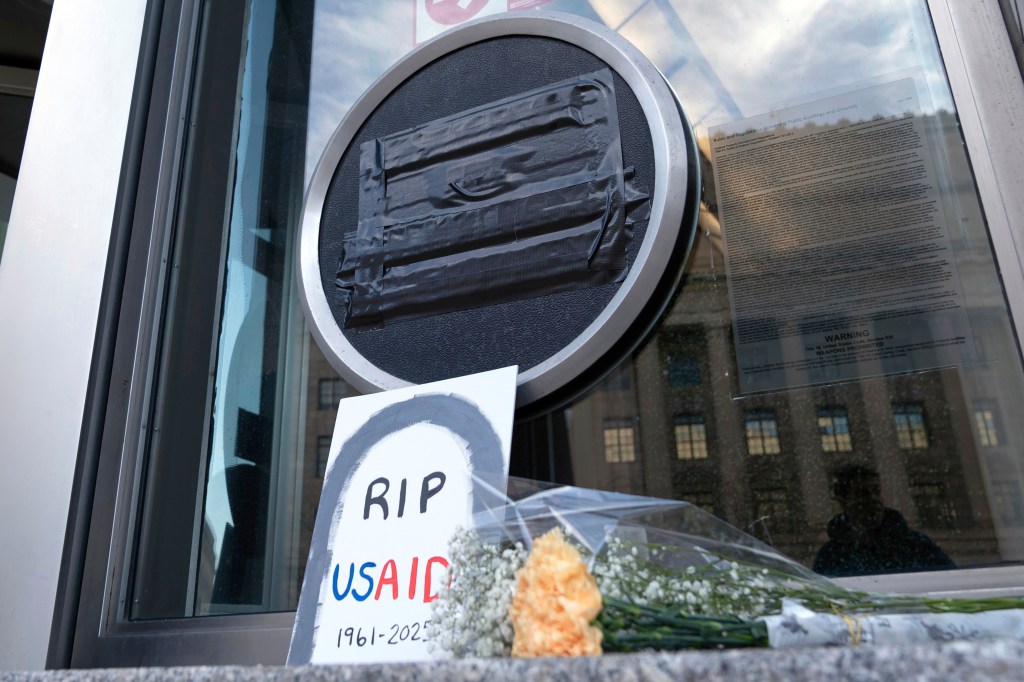
But this week, the passage of the reconciliation bill that seems, on paper, to stick it to the working poor while enriching the already wealthy made that difference hard to see. While that was under marathon consideration and amendment voting, the U.S. Agency for International Development quietly and permanently turned out the lights, sealing the fate of millions of impoverished people on the continent of Africa, more than anywhere else.
Medical journal Lancet released a report that day before its closure on the positive impact the agency has had worldwide for the last two decades. It includes a forecast analysis of the impact of the absence of USAID, the upshot of which is that 14 million people are likely to die without the agency’s food and medical assistance by 2030, and 4.5 million of them are expected to be children under the age of five.
Kudos to Presidents Bush and Obama for having some harsh, public criticism of President Trump for shuttering an agency that has done so much obvious good for so many, and that makes the United States look good when so many other international choices of the recent past have not. The agency is now to be absorbed into the State Department, with little clarity on what exactly that means.
The projects of USAID were one clear thing that countered my colleague’s assertion about America’s central principle. The actions of a whole lot of individual Americans now need to prove her wrong.
Responses to “7/2/25”
-
Unfortunately, I’d have to agree with your colleague; slavery wasn’t even the “original sin” of this country…genocide and theft are the original sins. I absolutely believe in this nation’s original intent to harm those who stood in the way of acquisition of land, the intent to harm those who could provide free labor and wealth as property, and the ever continuing intent to harm anyone who opposes the fragility of the neurosis of white supremacy. None of this is an accident.
LikeLike


 Quips & Clips
Leave a reply to Blackbird Cancel reply