Subscribe to get access to most recent content
Read more of this content when you subscribe today.
No Regrets
February 4, 2025
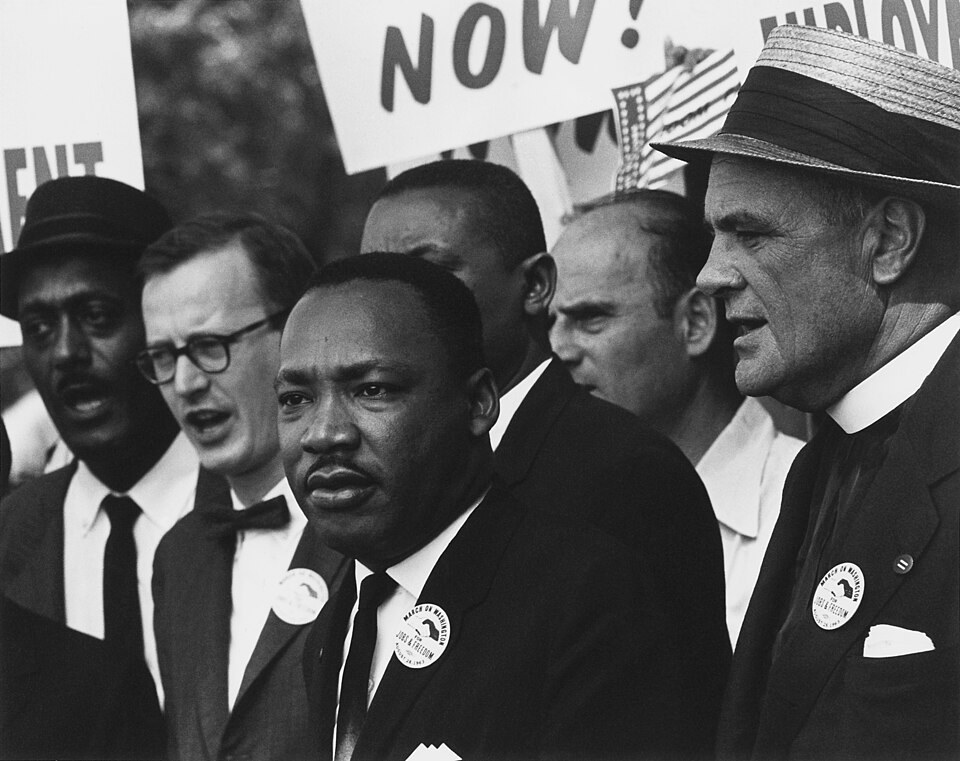
Democratic politicians, listen up: “I simply could not cosign the continuation of the system.” So said my activist son, who, along with many in the Gen Z demographic, chose to sit out the 2024 election rather than vote for a Democratic party they found inauthentic and untrustworthy.
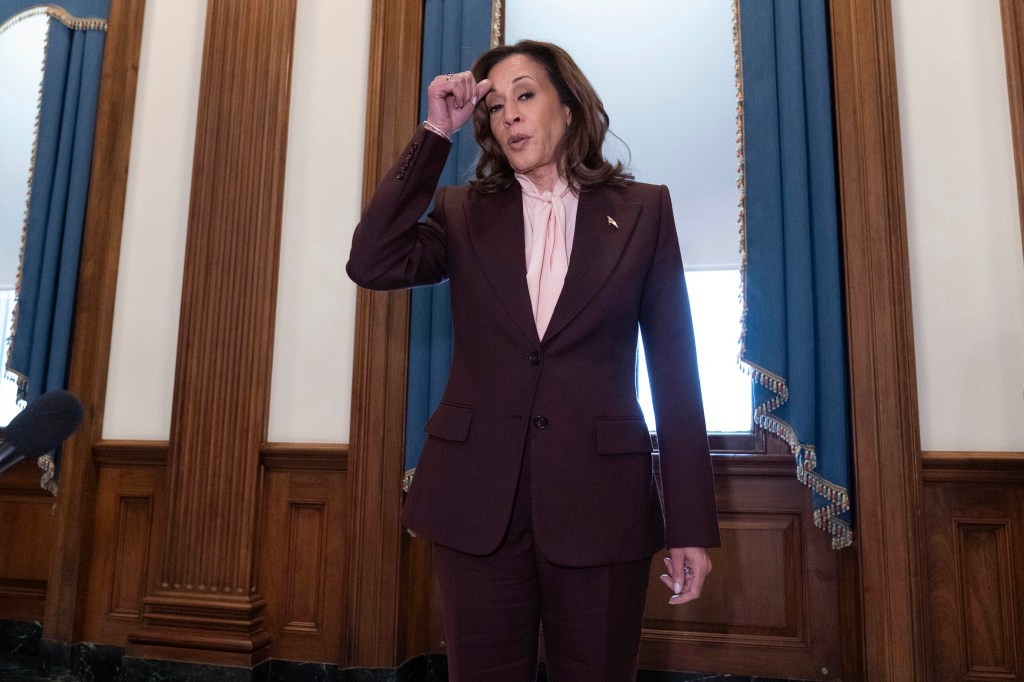
In these first two weeks of the new administration, I thought those on the Left who were not fond enough of Vice President Kamala Harris to vote for her – especially those who fall into groups that were immediately under attack by Mr. Trump – must be feeling some regret. Clearly, I was wrong.
My oldest child is non-binary, uses they/them pronouns, and has friends who are transgender. Though there has been at least a moment of wondering whether voting for Harris would have been better than what we have now, it’s only been momentary. Chaos, they told me, was anticipated, and in some sense, welcomed. Anything but the status quo.
After allowing the absolutism to sink in, my reaction was two-fold. First, I wondered how many of the 57% of voters in a recent highly-publicized Quinnipiac University poll shared the sentiment that embracing the status quo was wholly unacceptable. Second, I couldn’t stop thinking about my late mother and what she would have said about the perspective of her firstborn grandchild.
My mother was raised in a town in Alabama too small to have a stoplight. Her high school diploma came from a separate-and-not-equal school. Birmingham was not just in her backyard; it was a city where family members faced off against Bull Conner and his police department. There were no political events in her life larger than the passage of the Civil Rights Act of 1964 and the Voting Rights Act of 1965. She believed in voting. She knew they’d earned it.
She also believed in leveling the playing field, having been a woman in the workforce in the 1960s and 1970s. She would have had a few problems with Donald Trump’s administration and the elimination of diversity programs, and she would have had something to say to her grandson about effectively voting for that administration by not voting at all.
My child tells me they’re not an accelerationist, but they also thinks progress cannot happen without a crisis. This does not appear to be a majority view in the 18-29 age group. The majority of youth who didn’t vote were simply unengaged, saying they were never approached by any campaign, or they felt unheard on issues like the economy (like many voters over 30), or they simply didn’t like any candidate.
Biden won the youth vote by 26 percentage points. Harris only won the group by four points. Democrats have taken for granted that the kids are with them in every election since 2004; then came a war in Gaza that young voters adamantly opposed. Though Vice President Harris provided momentary hope of change in U.S. policy toward Israel in its war in Gaza, she ultimately did not say what they told her they needed to hear in order to vote for her. And that may have been the ballgame. If nothing else, Donald Trump tells his public what it wants to hear – and what he will actually do, even if they sometimes seem to believe he’s just joking.
So Democrats, listen up! Authentically speaking and actively listening is needed to get a key piece of your coalition to the polls, the group that is least reliable but whose turnout can turn an election. Political-speak won’t cut it anymore, when even a community organizer with roots in segregated Alabama would rather stay home than cosign a continuation of the status quo – and so would too many of their friends.
“They Go Back”
February 12, 20025
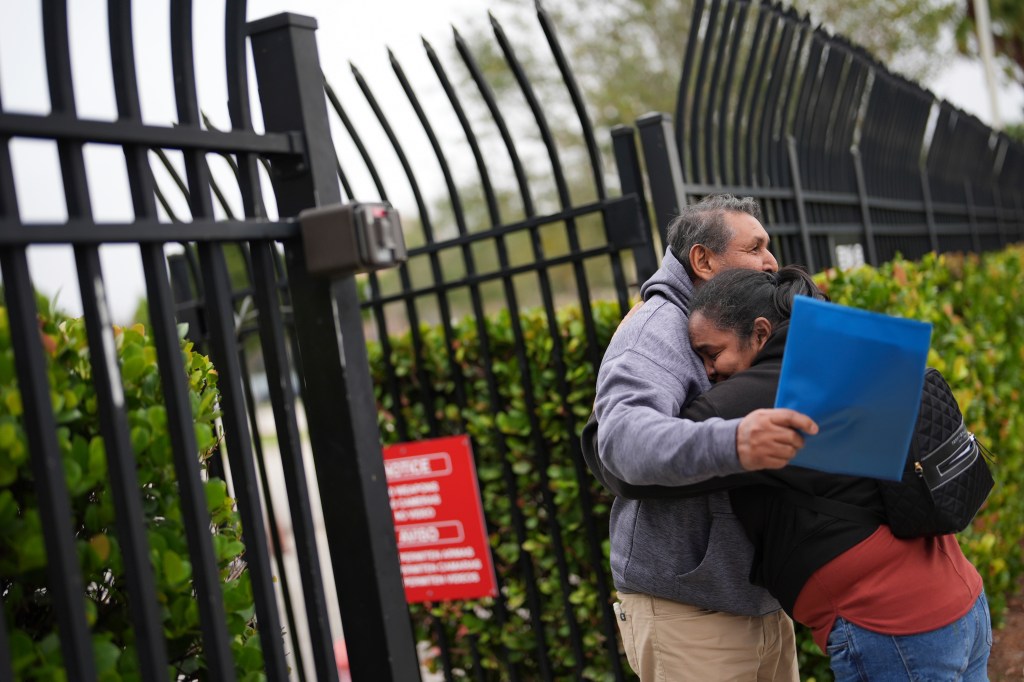
“Nooo,” he said, gently shaking his head. “I don’t like all he’s doing, but….” He lifted his head for a moment, looking up, taking time to gather the English words of his second language and put them in proper order. When he began again, he made eye contact with me, as if to be sure I was paying attention and catching his meaning, even if his English was not clear.
“This is not my country,” he said, “So, I feel… I don’t have say in what happens. But,” he took a deep breath, “the people come here for just the green card. And the criminals…” I waited for him to finish the sentence, fascinated and a little bit alarmed.
His name is Jorge, and he preferred not to give his last name. He is a pest control technician in the DC-Maryland-Virginia area (DMV) who has worked in my neighborhood for years. He was born and raised in Peru and has been in the United States for a decade.
“I came here to work, but everybody no come to work. They come just to take. Me and my family, we don’t take anything…the programs. We work.”
I listened to this middle-aged working professional speak earnestly about his working life in the U.S. and proudly about his country of origin and the daughters he has in college. One is a senior, the other a freshman, both in schools far north of the DMV. He was giving me a live argument of one I’d seen several times online: that most Latinos want illegal immigrants — asylum seekers included — deported.
“When you say no one comes to the country to work,” I began, “what about all the men that can be seen standing at any 7-11 in the pre-dawn hours or down at a Home Depot?“
“Yes! They go to work, but just that day. And they go spend the money from the day in the bars on the alcohol.”
At least one of my eyebrows rose involuntarily, and Jorge noticed. His face became pleading, as if he could read in my eyes an accusation of bigotry. “Many of the people don’t come to build a life,” he said gently.
“How do you know that?“ I asked. I suspected that there were far more who did come to build a life than the number he believed came to do day jobs and drink, but the proof of my theories was anecdotal, in stories from immigration attorneys and social workers. Did Jorge have stories of his own to counter?
Unfortunately, we didn’t get that far. For whether he did not hear my question or simply ignored it, he turned the conversation in a different direction.
“The cell phones,” he said with annoyance. I waited for him to continue, because I was lost and couldn’t deduce where his thoughts were taking us. “The Venezuelan gangs, they take the cell phones here now. They do this at home – Peru, Colombia, Venezuela. Last few years, now it is here. The men on motor bikes.”
Clearly, I had research to do. I had no idea what he was talking about when referencing theft of cell phones by men on motorbikes. But it alarmed him greatly, and he repeated, “Now, it’s here,” Shaking his head, he added, “They go back.”
He said it with the tone of an exhausted parent trying to get a rambunctious toddler back into bed. As I processed the tone along with his words, I realized he sounded pained, as if he couldn’t believe that what he’d left behind had followed him to the banks of the Chesapeake Bay and Potomac River.
I wondered how many documented immigrants from Latin American countries felt the same way for the same reasons. I also wondered if the legislative, political, and perhaps even ideological dilemma of the Democratic Party was encapsulated in the arguments made by one legal immigrant from a Latin country with a professional license and college tuition bills to pay.
Joe Biden was a Democratic president that didn’t simply fail to get illegal immigration under control in a timely fashion. The argument has been made that he invited it. In response to policies like family separation in the first Trump administration, Biden was undoubtedly motivated by compassion when he threw open the border for asylum claims upon entering the Oval Office. But politics likely played a part as well.
Until the election of 2024, Democrats had a substantial advantage in support from Latin communities. Future political benefit from asylum seekers-turned-citizens may also have weighed on the minds of Biden administration policymakers. But when there’s a statistically even split between Hispanics in favor of Trump’s deportation policies and those who are not, that political benefit seems unlikely to come to fruition.
When even the Latino immigrants championed by Democrats are saying we want you to send the illegal immigrants home, it would be political suicide for Democrats to do anything but work with the Republicans on a bill for deportation funding. The Democratic Party erred so badly on the issue of immigration that it now appears that the only position to hold in 2025 to have a chance to remain in office is, as Jorge succinctly stated, “They go back.”
Getting Played
January 27, 2025
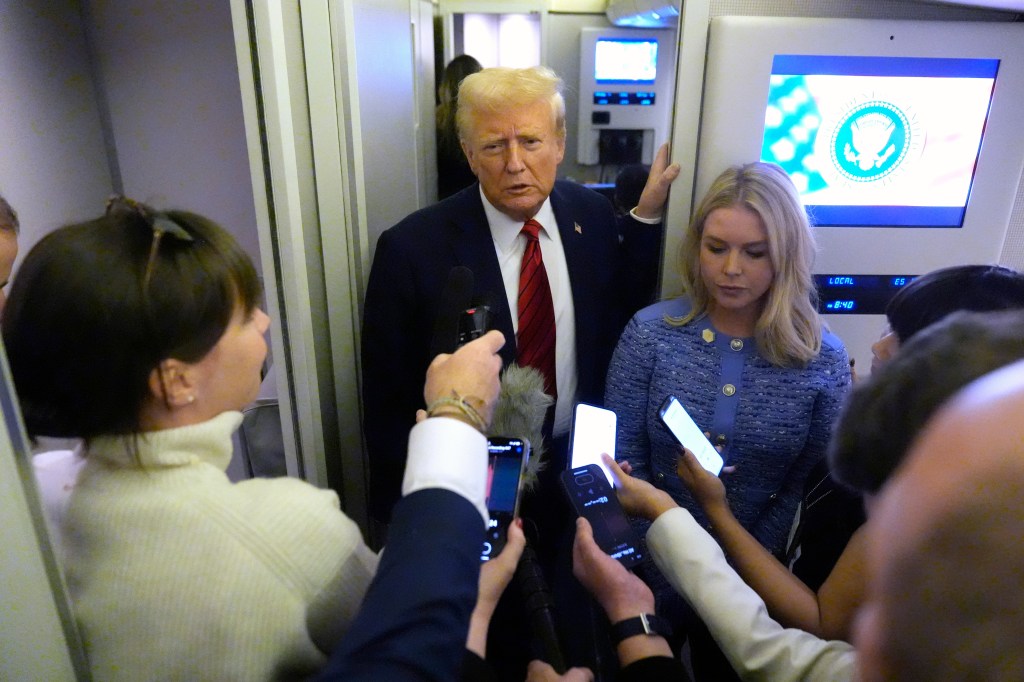
The mainstream media looks like it’s getting rolled. In just the first week of his second term, President Trump was alarmingly adept at getting news media professionals to follow all the bright shiny objects he wants them to analyze endlessly, while giving considerably less airtime to the rollback of measures that promote equal opportunity and uphold civil rights. The latter executive actions are as potentially long-lasting as the pardon of 1500 January 6th convicts. Those rollbacks are also more disturbing and disruptive to the lives of millions of Americans outside the bubble of the Beltway than the pardons or the firing of inspectors general.
How is it possible that not one of the Sunday morning talk shows included a single question to a Republican guest for their take on any one of the diversity or race-related orders? There wasn’t even a question in a panel discussion about what many social media users are calling the assault on brown and Black America.
That assault consists of putting DEI employees on administrative leave to await word of reassignment or final paycheck; reversing President Lyndon Johnson’s 1965 executive order prohibiting federal contractors from discriminating on the basis of race, color or sex when hiring; instructing the Civil Rights Division of the Justice Department not to file future actions, to halt current cases and to review consent decrees already finalized; and eliminating the “Justice40” program, which required that 40 percent of the benefits from certain environmental programs go to heavily-polluted communities, which are usually Black or Latino. (On Monday morning, DEI was eliminated in the Defense Department, as well.)
That is a lot of economic, judicial, and environmental damage tossed at Black communities and other people of color. People outside the Beltway and on social media are talking about it, but the Sunday shows did not. Something about these changes should have been worth a question to Sen. Lindsay Graham (R-SC), who appeared on both CNN’s State of the Union and NBC’s Meet the Press, and to Rep. Mike Turner (R-OH) or Vice President JD Vance, both of whom appeared on CBS’s Face the Nation. ABC’s This Week at least mentioned the DEI termination as a top line in the open for a show that featured an interview with Border Czar Tom Holman.
But the most fulsome mention of the actions against DEI – the only mention in response to a question asked – was made by Richard Fowler, a contributing writer for Forbes appearing as a panelist on Fox News Sunday. The question was on whether the country would actually learn anything new with the release of records about the assassinations of President John F. Kennedy and Dr. Martin Luther King, Jr. Fowler took the opportunity to note the records release could remind the country that Dr. King was killed while he was advocating for economic equality, and that he fought for the very executive order against employment discrimination that Donald Trump just rescinded.
As a former producer, I know that in any week filled with more news than a one-hour program can possibly cover, hard choices must be made. The debate usually surrounds the balance needed between holding policy makers accountable, both on headline items and on issues well below the fold, versus giving the public more of what it’s already talking about. It is a difficult thing to do, granted, but that balance was not met this week.
The whittling away of equal rights and equal opportunity are things on which the Fourth Estate should be most compelled to shine a light. The shiny objects have a light of their own. Media friends and colleagues, I implore you: please give a little less oxygen to the headlines of the week and more to actions with lasting implications. It benefits no one when the mainstream media gets rolled.
November 19, 2024
Let’s All Just Get Along?
January 17, 2025
Congressional Democrats appear to be trending toward a potentially self-defeating wave of behavior, as the second Trump administration comes to power. After the party lost the presidential election and lost ground in districts once seen as Democratic strongholds, Democratic leaders are reading the tea leaves and believing they say, “Play nice!” Worse yet, some Dems sound as if they believe the tea leaves say, “If you can’t beat ‘em, join ‘em.” But is that what they say? Is that the most accurate way to interpret the election results, or just the most expedient choice?
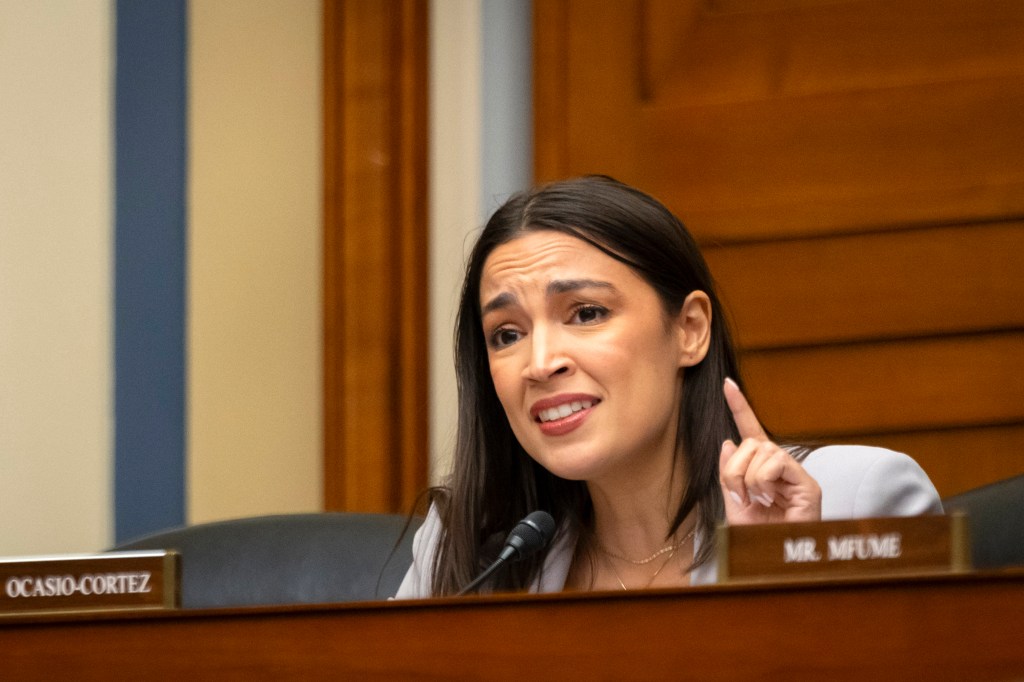
It’s one thing to have a Democrat like Val Hoyle of Oregon, who’s in a district that’s 42 percent Independent, explain that her constituents feel condescended to by Democrats who are busy being noble, protecting the rights of the most put upon (something for which I think no one should apologize). It makes sense she – and all Democrats – would speak of needing to find a way to work with Republicans to bring down the cost of living and improve the lives of working and middle-class Americans. It’s entirely another to have Progressive firebrand Alexandra Ocasio-Cortez sound surprisingly close to capitulating to the MAGA point of view of her own party.
The fourth-term New York Democrat last week said the reason “Democrats occasionally lose elections is because we’re too reflexively anti-Republican, and that we don’t lean into an ambitious vision for working-class Americans strongly enough.” Though there is much to criticize in the way Democrats are equally beholden to big-money donors who fund their campaigns, their legislative and campaign records show they are much more on the side of working and middle-class Americans than Republicans are. Let’s start with the job creation initiatives of the current and last Democratic presidents.
The outgoing Democratic administration of Joe Biden is responsible for the Infrastructure Investment and Jobs Act, which invested $1.2 trillion in updating the nation’s infrastructure. Countless construction and transportation jobs have been and will continue to be created in its wake.
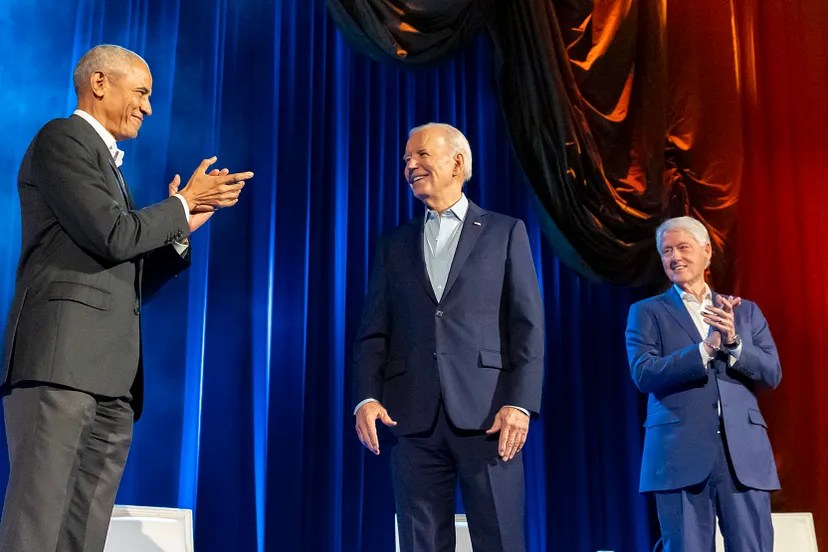
This on the heels of Barack Obama’s Small Business Jobs Act from last decade, which provided tax incentives to small business owners for hiring and enabled access to capital for small business creation. He also increased funding for public sector jobs under the American Recovery and Reinvestment Act, when the nation was in the Great Recession caused by non-working-class Wall Street excesses.
And in the election just lost, Vice President Kamala Harris laid out economic policy plans in her stump speech and campaign website that included: implementing paid family leave to help working families, expanding support for childcare and providing tax breaks to small businesses. Donald Trump promised additional tax breaks, as most Republican presidential candidates have since Ronald Reagan, but not much else for working class people (except to bring down the cost of groceries, which he admitted shortly after the election he would be unable to do).
When assessing Democrats, their losses and the depth of the lean into an ambitious policy position for working class Americans, it would be remiss to overlook the positions of Vermont Independent Senator Bernie Sanders, who caucuses with the Democrats and ran for the presidential nomination twice. Sanders promotes raising the minimum wage, providing tuition-free public college education and Medicare for all, reforming the tax code to close the gap on income inequality, strengthening unions (which overwhelmingly voted Democratic in the 2024 election) and penalizing companies that violate labor laws. While Sanders was not able to win the Democratic presidential nomination in 2016 or 2020, he nevertheless emerged the leader of the Progressive and working-class advocate wing of Congress, irrespective of party.
Where, exactly, have Democrats dropped the ball in their pursuit of an easier, softer path to the middle class? More importantly, what have Republicans proposed for the working and middle class that Democrats have not? In short, what exactly was/is Rep. Ocasio-Cortez thinking about when making her statement to Punchbowl News? I asked her, but did not receive a response from her or her office.
There is a lot to be said for bipartisanship and working across the aisle, for trying to get back to having government move in the way that it used to – or just move, period. But being re-elected to Congress by some voters who also voted for Donald Trump does not necessitate bipartisanship that throws one’s own party under the bus for the wrong reasons – particularly when the correct reasons are not hard to see.
Many Democratic candidates vastly underestimated the significance of the explosion in illegal immigration and the impact of the vice president’s refusal to take responsibility for it as a member of the current administration. Her repeated deflection of responsibility by spotlighting Donald Trump’s role in killing the bipartisan immigration bill simply added insult to injury.
Additionally, the Trump campaign did a masterful job of making the party, and Harris in particular, look like transgender rights was an issue more paramount than the cost of living. Some Democratic candidates who addressed both issues head on won their elections. Harris did not deign to address the transgender rights issue beyond saying she would follow the law.
Are these colossal oversights what AOC means by being reflexively anti-Republican? Or is it being against: the use of the Comstock Act to ban medical abortion; the elimination of the Department of Education; the use of the military to construct and maintain massive detention centers for millions promised to be deported; the prosecution of Justice Department officials and former members of Congress for investigating and prosecuting alleged illegalities by the incoming president; the enactment of anti-transgender legislation? These are just a few items that a Republican party with nearly complete fealty to Donald Trump and the MAGA view of the world have said they want to set in motion or have already passed. It seems perfectly sensible for anyone who isn’t a MAGA loyalist to be reflexively opposed to these items, as well as much of the contents of Project 2025.
Democrats in districts where Donald Trump won or made significant gains will do themselves and the country a disservice if they go along to get along, i.e. get re-elected. The Great Experiment has a much lower probability of surviving if opposition to objectionable administration policies is less than robust. Bipartisanship, legislative progress, even a lower cost of living should not be at the expense of the party or the country’s Democratic values. Surely, Rep. Ocasio-Cortez and other purple district Democrats can lean into that.

“American Carnage” Indeed
January 1, 2025
An American citizen from Texas, a U.S. Army veteran with the flag of Isis on his truck, mowed down scores of people in the streets of New Orleans just hours into this new year. At least 14 people are dead and 35 are injured, with the driver among the dead, after a shootout with police in which he wounded two officers.
This true American carnage, which police are labeling a terrorist act, occured the same day a Tesla cybertruck exploded in front of a Trump hotel in Las Vegas. Authorities do not believe the New Orleans perpetrator acted alone, and they’re investigating whether the Bourbon Street tragedy and the Nevada explosion are related.
All of this comes just one day after a man was pushed in front of a train off a subway platform in the Chelsea neighborhood of Manhattan. That apparent attempted murder happened several days after a 61 year-old New York woman was burned alive, also in a New York subway station.
The end of 2024 feels as if it has brought the End Times.
Meanwhile, on the political stage, outgoing Republican New Hampshire Governor Chris Sununu asserted today that Donald Trump’s second term is not going to be the evil dictatorship predicted by liberal media. It’s worth noting that promises Trump has made to his loyal base have everything to do with the sense that an evil dictatorship may be on its way. They include: the promise to use the military to round up millions of people to put them in detention camps, as they await deportation; cleaning up and out the Justice Department; and purging military leadership of officers who do not pledge loyalty to President Trump, just to name a few.
All of these things have collectively given the impression that authoritarian rule is coming. For the world‘s greatest democratic experiment, an authoritative government is its own End Times. Match that with random violence for both personal and political reasons and 2025 already looks to be a bad year to walk through life on autopilot.
“The Democrat Party is the One in Trouble”
History Says Otherwise
December 24, 2024
Outgoing Utah Senator Mitt Romney made headlines for “eviscerating Dems” in his December 15 appearance on State of the Union. He seemed intent to tear the opposing party a new one, claiming “The Democrat Party is the one in trouble,” adding, “I don’t know how they recover.” And that was just the warm-up. But Mitt Romney is leaving political life, was not a popular member of the MAGA party he often challenged and isn’t a source of advice or guidance for Democrats. Still, his assessment of the Democratic party can’t be ignored because of how many party players have expressed similar self-flagellating opinions since Kamala Harris lost all seven swing states and, with them, the presidency.
The specific moment of the long discussion that left a permanent impression was when the former Massachusetts governor told Jake Tapper: “[T]he Republican Party has become the party of the working-class, middle-class voter. And you’ve got to give Donald Trump credit for having done that, taken that away from the Democrats. … I mean, union guys and gals have left the Democratic Party and are voting Republican. And the Democratic Party is seen not as rich people, but as college professors and woke scolds.”
There was no irony in his statement, seemingly no awareness that he was simply feeding a decades-old cyclical narrative that is not new in the era of Trump. The whole college-educated-people-are-the-enemy-of-the-working-man trope started during Richard Nixon’s presidency, when college students were the predominant protesters against the Vietnam War, as theirs was the generation drafted to fight it. The Hard Hat Riot, a frightening precursor to January 6th insurrection, was a clash in the streets between hard hatted construction workers who attacked college students protesting the war in New York’s financial district.
According to the New York Times and its review of the book The Hardhat Riot: Nixon, New York City, and the Dawn of the White Working-Class Revolution, the construction workers left more than 100 wounded, most of whom were twenty-something-year-old college students and a quarter of whom were women. The hardhats also wounded seven police officers in an attack that moved over to city hall, where the flag was flying at half-mast for the students killed at Kent State. Construction workers also smashed windows at Pace University.
President Nixon, who had been working on a blue collar strategy, was reportedly overjoyed by the riot and said, “Thank God for the hard hats!” Blue collar workers helped secure Nixon’s landslide reelection in 1972, making him the first Republican president to win the majority of the union vote. Thus, the idea that Donald Trump has pulled off an alarming theft from the Democratic Party is erroneous — as is the suggestion that the white working class shift to Republicans is permanent, rather than based entirely upon the times and the candidates.
Democrats did not lose the working class in 2024 in a way that requires party adjustment of values or representation, any more than they did when white working-class Democrats voted for Republican Ronald Reagan in 1980 and 1984 and his vice president in 1988. For despite the popularity of George H. W. Bush, who won a war in record time in 1991, the economy led a plurality of white voters to take a chance on Rhodes scholar Bill Clinton a year later. And while Clinton moved the Democratic party to the center, he didn’t move it away from being educated or informed. He brought the working class and the college professors together in the voting booth.
Eight years after that, the voters rejected a Democratic nominee considered a woke scold on climate change in favor of the Republican they could have a beer with, when George W. Bush defeated Al Gore, with the help of a Supreme Court decision. In 2004, as in 2024, rejection of the intellectual, elitist candidate rested largely with gender-related scare tactics.
Bush Republicans scared voters with the idea that gay marriage would bring down the country, as Trump Republicans scared people with the idea that transgender people were going to take over women’s sports and assault women in bathrooms. But even after the success of the 2004 gay marriage scare, it was the implosion of the economy and collapse of the stock market — to say nothing of the profound unpopularity of a war many felt did not need to be waged in the first place — that led the American working class to elect an actual college professor, Barack Obama.
In short, the Romney theory that Democrats are now seen as “college professors and woke scolds” that “union guys and gals are fleeing” from and that the Democratic Party can’t recover is a dramatic hyperbole that history suggests is wholly inaccurate. The polls suggest it too.
Donald Trump won the popular vote but just missed winning the majority of the vote. He only won 1.47 percent more votes than the college-professor party’s candidate, according to Cook Political Report. House Republicans won a smaller majority than they did in the 2022 election, and Republicans picked up four seats in the Senate when one was expected the moment Joe Manchin chose not to run for re-election. That is not a fleeing, and it’s not a high enough disparity in numbers to constitute a mandate. Trump’s inability to get House Republicans to pass the continuing resolution he wanted, shortly before the holiday recess, indicates that as well.
Too many Democratic voters stayed home this election, and too many Independents didn’t believe Kamala Harris would deport illegal immigrants or could lower grocery costs. That is the problem that Democratic politicians need to solve. There should be no apology, by any Democratic voter or politician, for the party’s embrace of education, facts and tolerance. Any suggestion by outgoing Utah Senator Mitt Romney, or any other politician of either party, should be ignored.

Because TikTok Says So
December 2, 2024
Everything I ever needed to know about Election 2024, I learned from TikTok.
I got a crash course in the mindset of the U.S. electorate just two weeks into being a regular on the platform I previously used only to watch babies do something hilarious. I had fewer than 200 followers on the day that I posted about Donald Trump’s confirmation he plans to use U.S. military assets for mass deportations of illegal migrants. That one post earned me more than 100,000 likes, 1000 followers and thousands upon thousands of comments, mostly along the lines of the following nature: “Great! Finally, a politician who is going to do what he says he’ll do!” And, “That’s exactly why we elected him!” A personal favorite: “What’s wrong with that? We’ve been invaded; we need the military.”
I answered the question by pointing out that the Posse Comitatus Act of 1878 prohibits the Executive Branch from using the U.S. military as a police force on U.S. soil. That was not what the audience wanted to hear. That was actual law, a relevant and important fact. Trump voters made clear in the comments to my post that they want mass deportation so badly that they are in favor of whatever means Donald Trump uses to accomplish that end, no matter what the Posse Comitatus has to say.
That was lesson number one about my fellow citizens, and it was stark: MAGA world wants what it wants. Period. Breaking laws and norms to get what they want may be little more to Trump supporters than the cost of doing business. The nation saw evidence of that single-minded disregard for facts and truth on January 6, 2021, but it appears to exist just as much in victory as it did in defeat.
In fact, countless Trump voters in my comments section simply didn’t believe the legal argument. Many claimed the military is only prohibited from being used against U.S. citizens, but it can be used against “illegals,” because Constitutional protections don’t apply to them!
What? The Constitution protects all people on U.S. soil, regardless of immigration status.
Lesson number two: The people who get their news primarily from social media appear not to know the specifics of the laws they dislike. They often don’t even know the key facts of a controversy being discussed.
This is not a big news flash, of course. The electorate has never been as obsessed with politics and law as politicians, lobbyists and media members must be. It was nevertheless a genuine surprise to see how many people prefer to repeat the same line or lie than simply use Google when faced with a fact they claim is not true.
That brought me to lesson number three: The U.S. isn’t just a country full of under-informed people on social media; it’s a country full of folks on social media who seem perfectly happy to stay under-informed, so long as they are on the winning “side” of the political fight. Which brings me to lesson number four.
In the land of TikTok, politics is treated like nothing more than a game. “We won” and “Landslide!” are constant in the comments on my Trump-related political posts. “Trump’s your daddy now” is another nauseating favorite. MAGA faithful participate in an issue discussion as if it’s a taunting tailgate before the Superbowl or a riotous celebration after the championship is won. A Trump voter commented to a later post of mine on the so-called Republican mandate by saying, “That L is still tasting bitter,” referring to the shorthand for loss. A follower responded before I could, “We don’t treat this like a sport.” She was a Harris voter.
For many on TikTok who take the time to type a comment on a political post of any kind the response is often simply, “Who cares?” Users on both sides of the political divide throw that question around with noticeable frequency, dropping it into comments on posts about issues as significant as war and about people as important as cabinet nominees. Election 2024 has been analyzed as the divide between those with college degrees and those without. But lesson number five from the land of TikTok suggests that divide is better described as between those who care about a plethora of policy issues and government itself and those who care primarily about one or two issues and have little interest in learning why it would be beneficial to care — and know — about more. Why? Because it’s the difference, for instance, between thinking tariffs are good for the average American’s bottom line and knowing that they are not.
To hear TikTok users tell it, information might as well be out of style. Facts and laws are irrelevant, if they are in the way of random Joe Schmoe voter getting what he wants and being on the winning side.
Politics is now a team sport, complete with mascots and online cheerleaders, and the team with the better cheerleaders has a much better chance of winning than the one with the more experienced quarterback. Presidential politicians waving around policy papers and quoting statistics would do well to take note of this new reality and adjust accordingly — particularly if competing with a MAGA-land successor. To fail to do so will be to lose.

Love Thy Neighbor? That Depends.
November 8, 2024
My parents and I were the first Black family in an all-white neighborhood in the New York City suburb of Stamford, Connecticut. My parents’ best friends in the downtown apartment complex was a young, white married couple, named Joanne and Phil. Joanne babysat me after school; Phil taught me how to play chess. Our families cared for each other. Nevertheless, my parents had a screaming match with their friends the weekend before the 1976 presidential election. They were supporting Georgia Governor Jimmy Carter, and the neighbors were supporting President Gerald Ford.
The fight left an impression on the memory of my second-grade self but not because of the shouting. What I remember most of that evening was the way we all said goodbye. Mom and Joanne hugged in the open doorway, Dad and Phil shook hands, and I got a kiss on the top of my head from my babysitter. There was also another hug between the two friends on Wednesday afternoon, when Mom came to pick me up from Joanne, the day after the country elected Jimmy Carter as the 39th president. It seems highly unlikely that is happening today between friends who placed different votes for the 47th president of the United States.
My career in media began in the mid-1990s, when Republicans regained control of Congress for the first time in four decades. The election of a draft-dodging, womanizing, pot-smoking, Baby Boomer to the White House brought the culture wars of the 1960s to Washington. Ronald Reagan conservatives went to war with President Bill Clinton in a way that made civility a thing of the past. Those years were the first time that I became wistful for the days when people could argue politics vehemently and loudly and still love and respect each other when the dust cleared.
We are even farther away from those days of mutual respect through disagreement than we were 30 years ago. So when President Biden came out Thursday and said “you can’t love your country only when you win,” and “you can’t love your neighbor only when you agree,” I wanted to agree with him — I was raised to completely agree with him — but I found I could not.
I remain concerned each time I set foot outside my house, despite the fact that I live in a deep blue city in a very blue state. I do not fear harm from a neighbor, disgruntled by the color of my skin or by the affection I publicly display with my wife. No, that’s not what I fear.
I fear encountering smug attitude from one of the 20 something year-old boys who speed too quickly down my street on rented scooters and wheelie bikes. That is the group in my immediate vicinity that most likely voted for Trump, even though Harris won the state. I fear being unable to resist the urge to knock them off their scooters, shake them by the shoulders and ask if they have a sister or aunt or girlfriend, ask if they love their mother and if they consider all of those people in their lives deserving of rights equal to a person with a penis. There were too many matters of life and death in this election not to fight with our neighbors over their votes, if so compelled.
This was an election where women’s lives were on the line, the absolute immunity of police to do as they want was on the line (to say nothing of the immunity of a narcissistic, amoral president), the outcome of wars abroad were on the line. It’s hard to just shrug one’s shoulders at a neighbor who voted for Trump on the basis of wanting a lower grocery bill — especially when so many other things will cost more under Trump tariffs.
Those who believe Trump will make life better for them voted with a self-interest we all possess. But there is considerable evidence that they were not reasonable in considering the choices and policies before them. There is considerable evidence most Trump voters have no idea how tariffs really work. They simply blindly believed their demi-god when he told them the experts were wrong about consumers paying higher prices with tariffs. They also seem to believe Trump is just going to round up the “bad” migrants not the ones my neighbors might actually work with at the construction site, the ones they probably like. So what does all the belief in misinformation tell us?
This election was more than just a divide of men versus women and white versus everybody else. I believe sexism and racism played a large role in the outcome of this election but not the most significant one. More than anything, this seems to have been an election of the informed versus the uninformed, the engaged versus the uncurious. That state of affairs did not seem to exist when I was in second grade, listening to my parents argue with their friends over whether Carter or Ford would be better for the country (it’s worth noting that three of the four people in that argument did not have college degrees). When friends voted differently 40 and 50 years ago, it was not simply about the cost of groceries with disregard for all else — and most people knew what constituted the all else.
The people of America no longer seem to care to know very much at all. Far too many don’t take the time to gather the facts. When they do, they often disagree on what they are. Or perhaps more importantly, they don’t agree on the order of importance for the facts that are mutually accepted.
I care more about the fact that women are dying, Republicans are responsible for it, and they have publicly said they want to go further in restricting reproductive rights and women’s health care by using the Comstock Act to prevent distribution of abortion medication. I care about the fact that a tariff trade war means prices will go up, not down, on a whole host of everyday life items. I care that my federal government is not run by someone who has consistently shown no care or concern about the checks and balances of our government or the independence of the judiciary. And I care that the president of the United States is not at all inclined to allow dictators — or elected allies — to decimate populations. Neighbors who voted for Trump either do not care about any of the above or they list all of the above below getting brown people out of the country as quickly as their hero can round them up.
I was raised to feel that you can’t just love your neighbor when you agree. I had it modeled for me. I missed it when it disappeared from view in the green rooms of Washington, D.C. television stations. But these aren’t just pocketbook issues we disagree on. They’re matters of life and death; they’re matters of equality versus subjugation. It may take the whole four years for me to love Trump-voting neighbors again. I’m sure Mom, Dad, Joanne and Phil would completely understand.
 Quips & Clips
You must be logged in to post a comment.