April 27, 2025
I’m married to the kind of Catholic who has repeatedly asked me, her Jewish wife, to remind her what Lent is all about and how long it is. In other words, she is a “Catholic in theory.” That was not so for her mother, Jackie, who wandered away from the church while raising her children but came back with devotion upon the loss of her own mother.
Jackie was my mother-in-law for almost 20 years before she passed somewhat suddenly. There was something poetic to me about the funeral for Pope Francis falling on the same weekend of the anniversary of Jackie’s death. Had she still been here, I imagine she would have watched some coverage of it and repeatedly drowned out the voiceover with commentary of her own.
In the first year of the Francis Pontificate, the Argentinian Cardinal once known as Jorge Bergoglio made headlines when, in response to a question about gay priests, he said, “If they accept the Lord and have goodwill, who am I to judge?” He went on later in the interview to say gay clergymen should not be marginalized; they should be integrated into society.
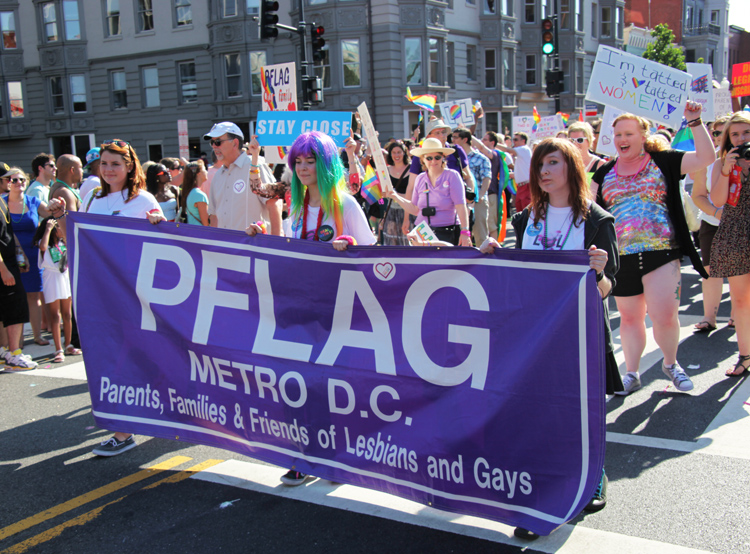
When I read that, I immediately thought of Jackie and what reaction was happening in the apartment of that newshound, 1960s activist and decades-long PFLAG (Parents, Families & Friends of Lesbians and Gays) mother. Jackie went to mass daily until perhaps the last few months of her life. The comfort provided by the priests and the congregation of her cancer-stricken mother’s parish in Washington, D.C., restored a bond with the church that had disappeared years earlier.
Though still lapsed from the Catholic church when her only son came out to her, she was nevertheless enough of a Silent Generation Black woman to flip out over the revelation. As it was told to me, she drove up the Eastern seaboard to break the news to her sister who lived in New York City and “get some advice” on what to do about her son being gay. Her sister apparently looked at her and said, “That’s the emergency?”
At this point in the story, my wife laughed pretty hard. Later, she could barely breathe through the laughter of recounting how her older brother broke the news to Jackie about her: “You know you have another one, right?”
Having been reassured by her sister that there was nothing to do because nothing was wrong, Jackie eventually set about changing her attitude. She joined PFLAG and became a regular attendee of meetings. By the time I joined the family in the early 2000s, Jackie had a good 20 years of PFLAG under her belt and had long been the living embodiment of the adage there’s no zealot like the convert. I remember Pride Day memorabilia around her apartment, and I remember her burning desire to help bring other scandalized parents into the fold of acceptance – and pride.
When the new Pope was announced in 2013, the reports of him being more liberal gave her hope for her church. But the woman was a trained scientist; she held her judgment until there was proof.
“He sounds more inclusive than Pope Benedict, at least. We’ll see,” Jackie said in early 2013. The July 2013, remark to a reporter in Brazil on not judging gay priests was a first piece of data for my mother-in-law, the LGBTQ+ community and, to the consternation of some conservative Catholics, for the world.
The openness signaled by Pope Francis started to sweep through the church the following year. In 2014, high-ranking church officials spoke for the first time of whether the Catholic church should listen to arguments in favor of gay marriage. By 2015, Pope Francis was meeting with transgender prisoners and gay activists.
But the moment that solidified a permanent place in the hearts of LGBTQ+ Catholics and the people who love them came in the middle of the pandemic in 2020. In a documentary titled “Francesco,” the Pontiff said, “Homosexual people have the right to be in a family. They are children of God. You can’t kick someone out of a family, nor make their life miserable for this. What we have to have is a civil union law; that way they are legally covered.” It seemed like a sea change for the church.
The first Jesuit to become Pontiff also spoke on other issues, like climate change and ending armed conflicts. He was a champion of the poor and disadvantaged and known as the “People’s Pope.” But there were also things he didn’t do that some had hoped for, like allowing women to be priests or changing doctrine on birth control. Even some in the LGBTQ+ community said that for all his support of civil unions and declaring that homosexuality shouldn’t be criminalized, he still didn’t change the church doctrine against gay marriage. In other words, he didn’t go far enough.
I talked politics with my mother-in-law, the former activist and forever newshound, but the Pope only came up once, when he was elected, while the world was waiting to see whether he was the change agent it appeared he might be. During this weekend when the departure of both seemed ever-present, I found myself thinking about where Jackie would have come down on the legacy of Pope Francis. I have a feeling the woman who once thought gay was an emergency would have thought Pope Francis did the best that he could.
 Quips & Clips