This year on the twenty-fifth anniversary of 9/11, I was enjoying my annual mother-daughter trip to Toronto with the very child friends and family were afraid I was going to deliver on that tragic day in 2001. As I reflected, I was struck by how profoundly world circumstances, the American government’s attitudes and my personal perspectives have changed since a day when I deeply understood why so many young men were enlisting. These days, it feels surreal to have empathized with those wanting to put themselves in harm’s way for the United States, a country that now feels at war not just with a potential nuclear power, but also immigrants, most ethnic minorities and with the very concept of humanity.
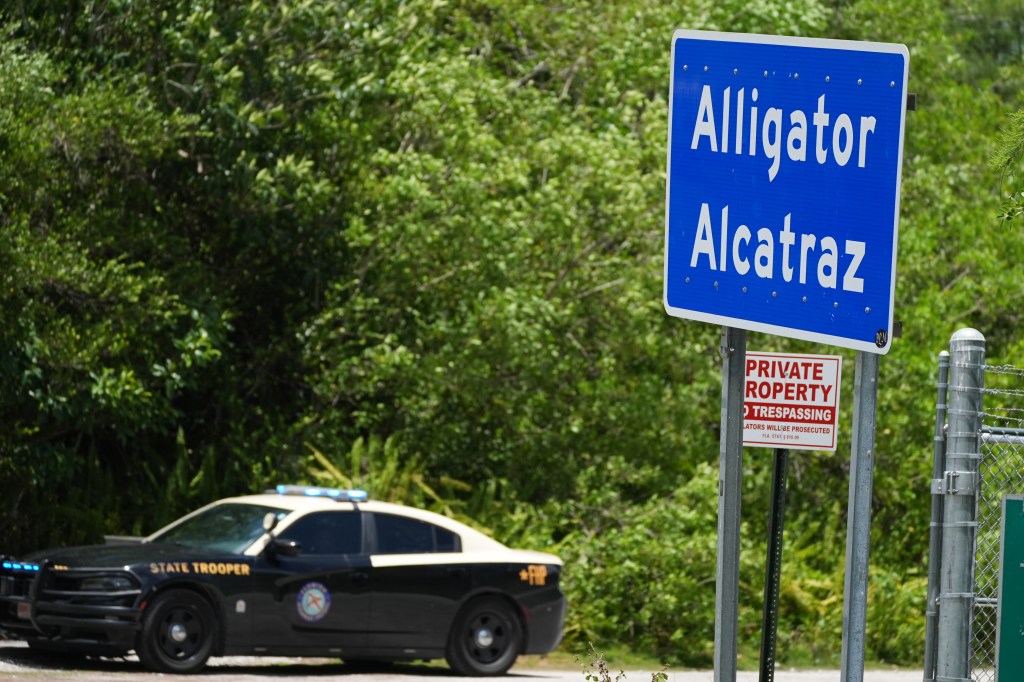
While I was on my way back home, former colleagues were reporting that a federal government report confirmed an allegation first made in December by Amnesty International: Officials at the now-closed detention center called Alligator Alcatraz had put some detainees in cages. When I first read that last year, the sickness in my stomach prevented me from reading to the end. Perhaps the cages were described in the December article as we now see them in photos, but I didn’t get that far in the article. I wish the people implementing this so-called calming technique had been prevented from getting as far they did in brutalizing fellow humans. It seems cosmically appropriate for this report to be released in the wake of the 25th anniversary of the event that led to the last government justification for torture of detainees, as these boxes – particularly in Florida’s mosquito-ridden, heat and humidity – were torture.
Prior to the release of the report, I had spent moments of the weekend deeply moved by Canada’s heartfelt commemoration of 9/11 – even while in the middle of a thoughtless and unnecessary trade war with the U.S. Though I have been in Toronto during the first or second weekend of September every year of this decade, this year was my first time spending the entirety of September 11 on Canadian soil. My placement for the quarter-century mark was educational.
In the weeks after 9/11, I was the mother of a newborn and a four-year-old, holding down only a part-time job. I was not paying attention to ongoing news reports about the aftermath of a terrorist attack on the nation. If I heard any reports about the extensiveness of Operation Yellow Ribbon in 2001, I forgot them. For 25 years. Though I was a television news producer, coverage of 9/11 with my various employers focused on D.C. and New York. This was the first year I got the full extent of Canadian generosity and compassion, courtesy of local news reports.
When the U.S. shut down all air traffic on September 11, 2001, the Canadian government launched Operation Yellow Ribbon to get more than 33,000 people safely on the ground, across 17 Canadian airports. But Gander International Airport in Newfoundland was central. It took 38 planes and almost 7000 people. The “plane people,” as they were called, wound up sleeping on the floor of the airport until local residents with warm houses and spare beds thought that was nonsensical.
According to local news reports, relationships were formed that continue to this day, with some of those plane people visiting their former hosts to mark the painful and chaotic day. On the 10th anniversary, Gander saw the unveiling of a memorial for not just the lives lost but of their own country’s hospitality. And this year, Canadian leaders lost no eloquence in their message for unity and support for those who are not fellow nationals.
Just days later, a cringe-worthy reminder of how differently the U.S. government thinks of and treats foreign nationals on American soil by comparison broke in the news, with that confirmed report of detainees in cages. I was not in Canada long enough to get reaction to the Alcatraz cage story, but then, “It’s horrible,” is all there is to say. But I did talk to several locals about the trade war, and despite their frustration over rising prices and a feeling of being bullied by President Trump, most still talked about partnership and the two nations being each other’s best friend. Imagine that.
Twenty-five years can feel like a long time ago or yesterday. What we learn, regardless of how it feels, seems most relevant. What I learned in these last few days about the last 25 years is that the more things change, the more they stay the same – and that’s true for the good and the bad.
Here’s hoping we track down more of the good.
 Quips & Clips